Speak up in meetings without rehearsing for an hour
You don’t need the perfect point. You need the first sentence. How to get it out early, even if you’re quiet or nervous.

Jai V. Pareek
Soft skills & EQ coach
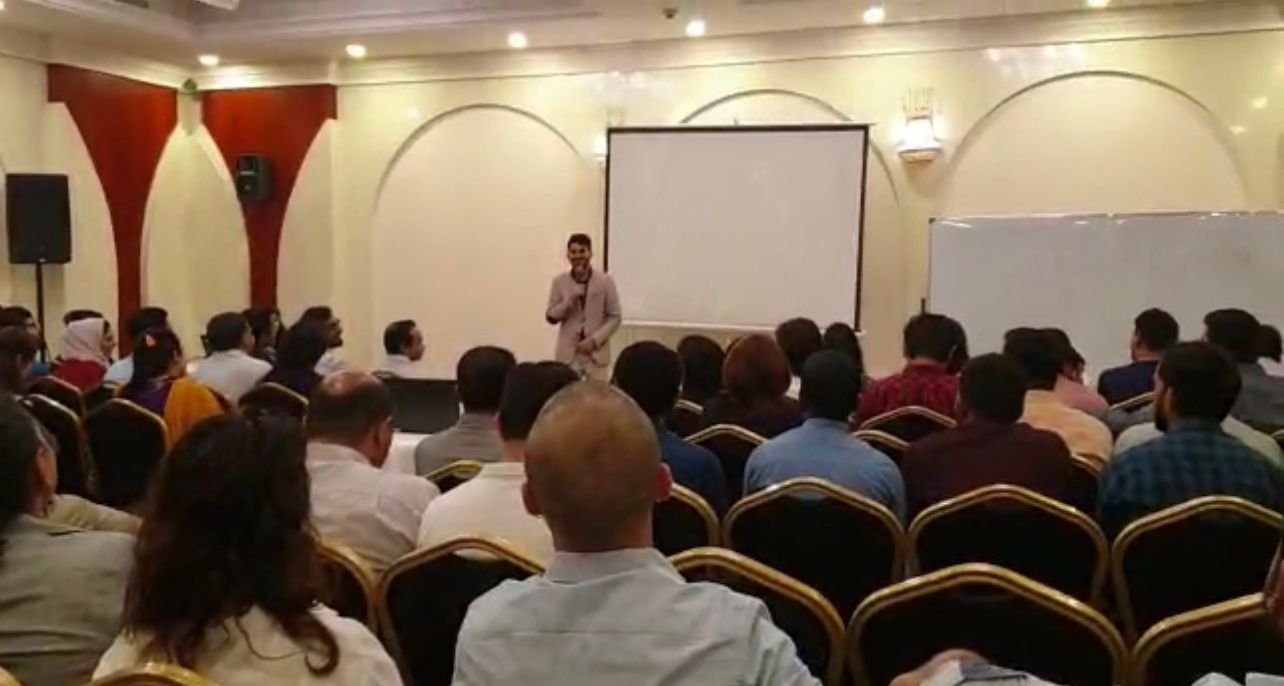
The first two minutes of a meeting are the easiest time to speak.
In this post
Short on time? Remember these 3 things
- Speak in the first 10 minutes. It gets harder the longer you wait.
- Use a starter line so you don’t need a perfect point.
- A good question counts as speaking up.
The meeting starts. You have a point. You rehearse it in your head. Someone else is talking. You rehearse it again, better. Twenty minutes pass. Then a colleague says almost exactly what you were thinking, and the manager says “great point, Arjun”. You say nothing for the rest of the meeting.
If this happens to you, the problem isn’t your ideas. It’s the waiting. The longer you wait, the higher the bar feels, until speaking feels impossible.
Why waiting makes it worse
Every minute you stay quiet, your brain raises the standard: “If I speak now, it better be brilliant.” Meanwhile your nervousness grows. By the end, nothing feels good enough.
The fix is simple: speak early, even if it’s small. Once your voice has been heard once, the second time is much easier.
Myth
I should only speak when I have something perfect to say.
Truth
Meetings reward clear, useful contributions, not perfect ones.
Starter lines that buy you time
You don’t need a speech. Use a starter, then say your point:
Build on someone
“Adding to what Priya said…” Then your point.
Ask a question
“Can I ask a quick question about the timeline?” Questions are a fully valid way to speak up.
Share a concern
“One thing I want to flag is…”
Summarise
“So if I understand correctly, we’re doing X by Friday?” Summaries make you look sharp.
A 30-second prep, not an hour
Before the meeting, write on a sticky note: one point you want to make, and one question you could ask. That’s it. You’re not scripting the meeting, just giving yourself an entry ticket.
When you get interrupted
Hold your ground politely.
“I’d like to finish this thought, and then I’d love to hear your view.”
“You don’t need to be the loudest voice. You just need to be heard once.”
The 10-minute rule
In your next three meetings, say something, anything useful, within the first 10 minutes. A question, a summary, a “plus one”. Track how it feels by the third meeting.
Go deeper
The Ultimate Confidence Course
Speak up, handle people and walk into rooms with confidence. In Hinglish.
See the courseThe bottom line
Good ideas left in your head help nobody. Speak early, start small, use a starter line. Visibility at work isn’t about being loud. It’s about being heard.
Topics
Was this post useful?
Thank you! Share it with one person who needs to hear this today.
Written by
Jai V. Pareek
India’s Practical Transformation Coach · Author of Shut Up and Level Up
I learned most life skills the hard way, so you don’t have to. Since 2017 I have trained students, professionals and couples in soft skills and emotional intelligence, in simple language and with real-life examples.
Reading is step one
Find your voice at work
My Ultimate Confidence Course turns tips like these into habits.

Quick answers
Questions people ask
What if my English isn’t perfect?
Clarity matters more than grammar. Short, simple sentences work best.
What if I say something wrong?
Then you learn something. Most people won’t remember it tomorrow.
How do I speak up in online meetings?
Use the chat or “raise hand”, then speak. Unmute early, it’s the same 10-minute rule.
What if my manager always talks over me?
Speak to them privately: “I have ideas I’d like to share in meetings. Can you help me get space?”
Keep reading
You might also like

Soft skills · 4 min read
How to introduce yourself in 30 seconds
A simple structure for the question everyone asks.
Read the postSoft skills · 6 min read
The skills school forgot to teach us
Life skills nobody put on the syllabus.
Read the post
Soft skills · 5 min read
How to say no without feeling guilty
A 3-line script for your boss, relatives and friends.
Read the postOne useful life skill. Every Sunday.
Short, practical, no spam. Unsubscribe anytime.
Sign-ups open soon.