Small talk for people who hate small talk
Three questions that turn an awkward two minutes into an actual conversation, at office parties, family weddings and networking events.

Jai V. Pareek
Soft skills & EQ coach
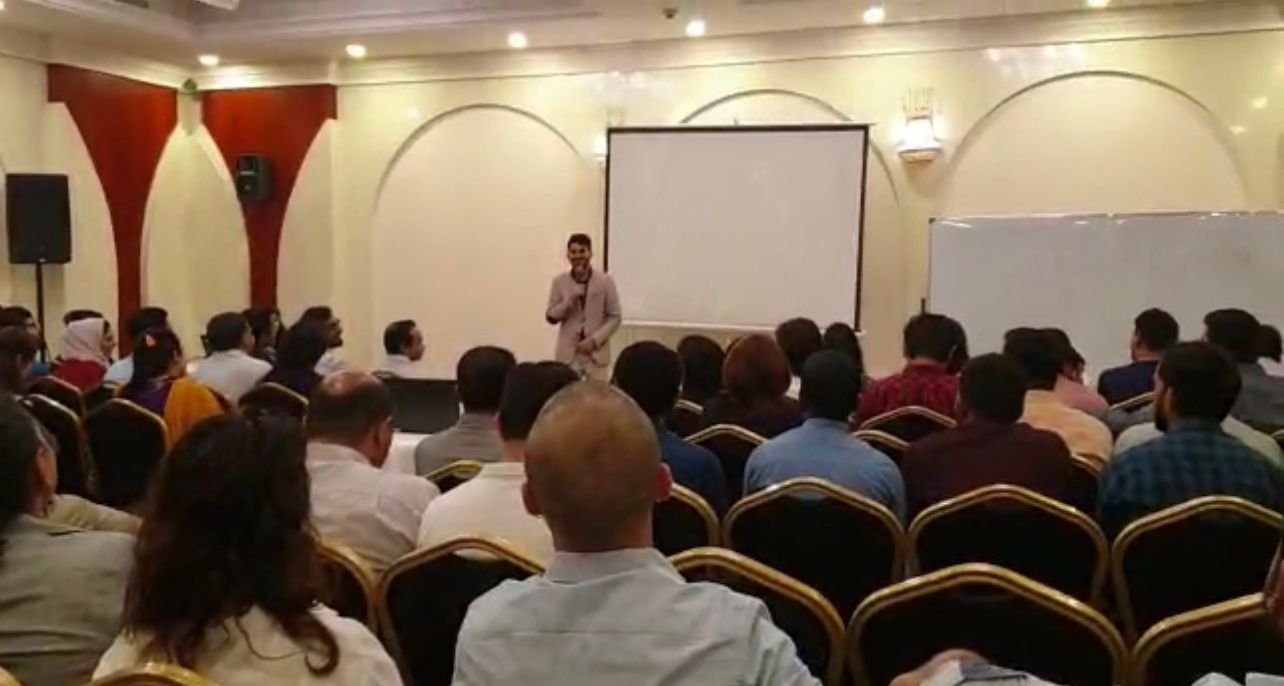
Small talk is the doorway, not the room.
In this post
Short on time? Remember these 3 things
- Small talk is a doorway to a real conversation, not the conversation itself.
- Use the F-O-R questions: Family, Occupation, Recreation, with a twist.
- Listen for one detail and ask about it. That is the whole trick.
A wedding in Jaipur. You are standing near the food counter with a plate of gol gappe and a man you’ve never met. “So… nice function.” “Yes, very nice.” Silence. You both stare at the dessert counter like it’s the most interesting thing in Rajasthan.
If you hate small talk, it’s usually not because you’re boring. It’s because small talk feels fake. Weather, traffic, “what do you do?”. You want a real conversation, but you don’t know how to get from “nice function” to anything real. Here’s the bridge.
Why small talk matters
Small talk is how strangers check if you are safe. It’s a two-minute trust test. Skip it, and people feel rushed. Fail it, and they walk away. Pass it, and suddenly you’re talking about something that actually matters.
Almost every job offer, client and friendship started with two minutes of something like “so, how do you know the bride?”.
The F-O-R questions, with a twist
F-O-R stands for Family, Occupation, Recreation. Most people ask the boring version. Ask the twisted version:
Family / connection
Not “how do you know them?” but “how do you know the couple? What’s the story there?” Stories are easier to talk about than facts.
Occupation
Not “what do you do?” but “what’s keeping you busy these days?” It lets people talk about work, kids, a side project, anything they care about.
Recreation
Not “any hobbies?” but “what do you do when you’re not working?” or “what’s the best thing you did this month?”
The real trick: follow one detail
The question is only the key. The door opens when you listen. In their answer, there will be one detail with energy in it. “I’m in banking, but honestly I’m trying to start a bakery on weekends.” Ignore banking. Ask about the bakery.
“Wait, a bakery? How did that start?” Now you’re not making small talk. You’re in a conversation.
Myth
Good conversationalists have interesting things to say.
Truth
Good conversationalists ask interesting follow-up questions.
The polite exit
Every small talk needs an ending. Leave warmly.
“It was really nice talking to you. I’m going to say hi to my cousin before he disappears, but let’s connect on LinkedIn?”
What kills small talk
One-word answers. Always add one detail: not “Jaipur”, but “Jaipur, moved here for college and never left.”
Talking about yourself for five minutes. Share, then hand the ball back with a question.
Checking your phone. Even once. It tells the other person they lost.
The 3-person challenge
At your next event, start three short conversations using one twisted F-O-R question each. Your only goal is to find one detail per person and ask about it. Don’t judge how it goes. Just count to three.
Go deeper
The Ultimate Confidence Course
Speak up, walk into any room and handle people with ease. A short course in Hinglish.
See the courseThe bottom line
You don’t need to love small talk. You just need to get through the doorway. Ask a slightly better question, listen for one detail, and follow it. Real conversations are always one question away.
Topics
Was this post useful?
Thank you! Share it with one person who needs to hear this today.
Written by
Jai V. Pareek
India’s Practical Transformation Coach · Author of Shut Up and Level Up
I learned most life skills the hard way, so you don’t have to. Since 2017 I have trained students, professionals and couples in soft skills and emotional intelligence, in simple language and with real-life examples.
Reading is step one
Walk into any room with confidence
My Ultimate Confidence Course turns tips like these into daily practice, with videos and small challenges.

Quick answers
Questions people ask
What if I’m an introvert?
Introverts are often great at small talk because they listen. Use questions so the other person talks more.
What topics should I avoid?
Salary, politics, religion, weight and “when are you getting married?”. Especially at Indian weddings.
How long should small talk last?
Two to five minutes. Then either go deeper or exit politely.
What if they give one-word answers?
Try one more open question. If it still doesn’t flow, exit kindly. Not every conversation is meant to happen.
Keep reading
You might also like

Soft skills · 4 min read
How to introduce yourself in 30 seconds
A simple structure for the question everyone asks.
Read the postSoft skills · 5 min read
How to say no without feeling guilty
A 3-line script for your boss, relatives and friends.
Read the post
Soft skills · 6 min read
The skills school forgot to teach us
Life skills nobody put on the syllabus.
Read the postOne useful life skill. Every Sunday.
Short, practical, no spam. Unsubscribe anytime.
Sign-ups open soon.