Why you replay conversations at 2 a.m.
Overthinking is your mind trying to finish something. Here is why the same conversation plays on loop at night, and how to close the loop so you can actually sleep.

Jai V. Pareek
Soft skills & EQ coach

Your mind replays what it thinks is unfinished.
In this post
Short on time? Remember these 3 things
- Replaying is your brain trying to finish an unfinished conversation.
- Write it down: what happened, what I feel, what I will do.
- If there is nothing to do, tell your brain so. Out loud helps.
It is 2 a.m. The house is quiet. And your mind is back in that meeting, that phone call, that dinner with your in-laws. You said the wrong thing. Or you said nothing. Now you are writing better replies in your head, one after another, as if the other person is still listening.
If this happens to you, you are not crazy and you are not alone. Almost everyone does it. The good news: there is a reason it happens, and once you understand the reason, you can switch it off much faster.
What your brain is actually doing
Psychologists call it the Zeigarnik effect: our minds hold on to unfinished tasks much more than finished ones. A conversation that ended badly feels unfinished. So your brain keeps it open, like a browser tab, and replays it, hoping to find the perfect ending.
At night there is nothing else competing for attention. No phone calls, no work, no noise. So the open tab moves to the front of the screen.
Myth
Replaying it will help me understand what went wrong.
Truth
After the second replay you are not learning anything new. You are just hurting yourself again.
The three kinds of replays
The “I should have said” replay. You are writing comebacks. This is ego, not learning.
The “what will they think” replay. You are predicting their judgment. This is fear.
The “I hurt someone” replay. You actually did something wrong. This one is useful, but only once, and only if it ends in action.
How to close the loop
Your brain wants an ending. Give it one, on paper. Keep a notebook next to your bed and do this:
What happened (facts only)
“In the meeting, Rahul said my report was late. I didn’t reply.” No adjectives, no story.
What I feel
“Embarrassed. A bit angry.” Naming the feeling cuts its volume. It is one of the oldest emotional intelligence tools.
What I will do, or not do
“Tomorrow at 11, I’ll tell Rahul the delay was because of the data team.” Or: “Nothing to do. It’s over.”
That last line is the magic. When you write “nothing to do”, you are closing the tab yourself instead of waiting for your brain to do it. Some people find it helps to say it out loud: “This is finished. I am done for tonight.”
“You cannot rewrite yesterday’s conversation. You can only write tomorrow’s.”
What not to do at 2 a.m.
Don’t send the message. Night-time texts are written by your most tired, most emotional self. Draft it, don’t send it.
Don’t scroll. The phone feels like an escape, but it keeps your brain switched on.
Don’t argue with the thought. “Stop thinking about it” never works. Write it down instead. The page holds it so you don’t have to.
The 10-minute worry window
Tomorrow evening, set a 10-minute timer at 7 p.m. Sit with your notebook and think about everything that is bothering you, on purpose. When the timer ends, close the notebook. When a worry shows up at night, tell it: “Not now. 7 p.m. tomorrow.” It sounds silly. It works.
Go deeper
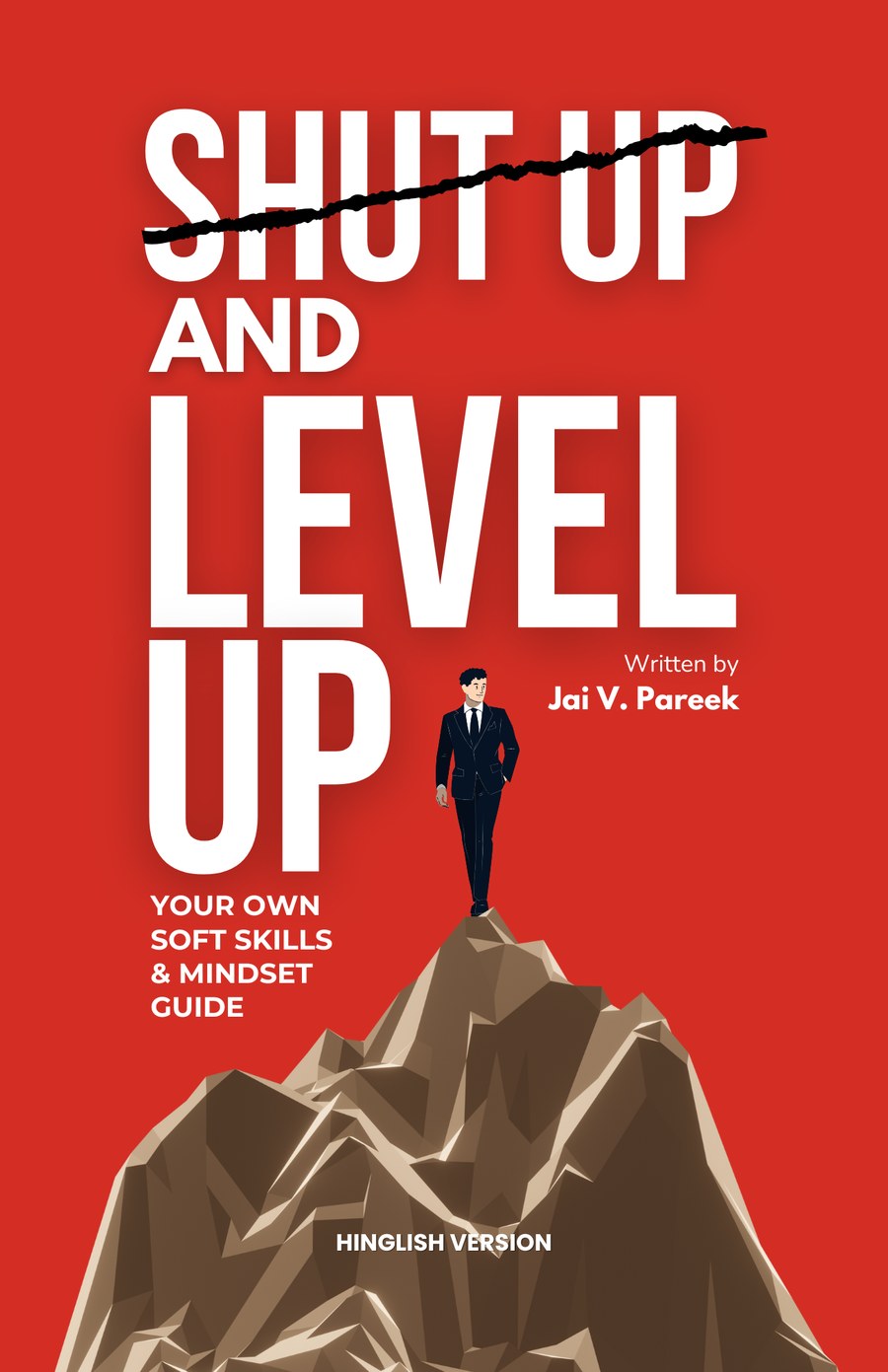
Shut Up and Level Up
50+ practical life skills in Hinglish, including overthinking, self-talk and emotional control.
Get the bookWhen to get more help
If you are replaying conversations every night for weeks, can’t sleep, or the thoughts are getting darker, please talk to someone: a friend, a doctor, a counsellor. That is not weakness. That is maintenance.
For most of us, though, it is just an open tab. Write it down, give it an ending, and let yourself sleep.
Topics
Was this post useful?
Thank you! Share it with one person who needs to hear this today.
Written by
Jai V. Pareek
India’s Practical Transformation Coach · Author of Shut Up and Level Up
I learned most life skills the hard way, so you don’t have to. Since 2017 I have trained students, professionals and couples in soft skills and emotional intelligence, in simple language and with real-life examples.
Reading is step one
Talk it through, one-on-one
If the same thoughts keep coming back, a private conversation can untangle them faster than any article.

Quick answers
Questions people ask
Is replaying conversations a sign of anxiety?
Occasional replaying is normal. If it is constant, affects sleep for weeks, or comes with panic, speak to a doctor or counsellor.
Why does it happen more at night?
There are fewer distractions, and a tired brain is worse at letting go.
Does journaling really help?
Yes. Writing turns a loop into a list, and a list has an end.
What if I really did hurt someone?
Then the replay is useful once. Decide what you will say tomorrow, write it down, and act on it.
Keep reading
You might also like

Emotional intelligence · 5 min read
Anger is information. Here is how to read it
Three questions before you send that message.
Read the postEmotional intelligence · 6 min read
Emotionally strong is not emotionally silent
What handling a feeling actually looks like.
Read the post
Soft skills · 5 min read
How to say no without feeling guilty
A 3-line script for your boss, relatives and friends.
Read the postOne useful life skill. Every Sunday.
Short, practical, no spam. Unsubscribe anytime.
Sign-ups open soon.