Emotionally strong, not emotionally silent
Most Indian men were taught that a real man doesn’t cry, doesn’t complain and doesn’t talk about feelings. So we went quiet, and called it strength. Here is what emotional strength actually looks like, why silence is costing us so much, and a simple daily practice to build real EQ, without losing your manliness.

Jai V. Pareek
Soft skills & EQ coach
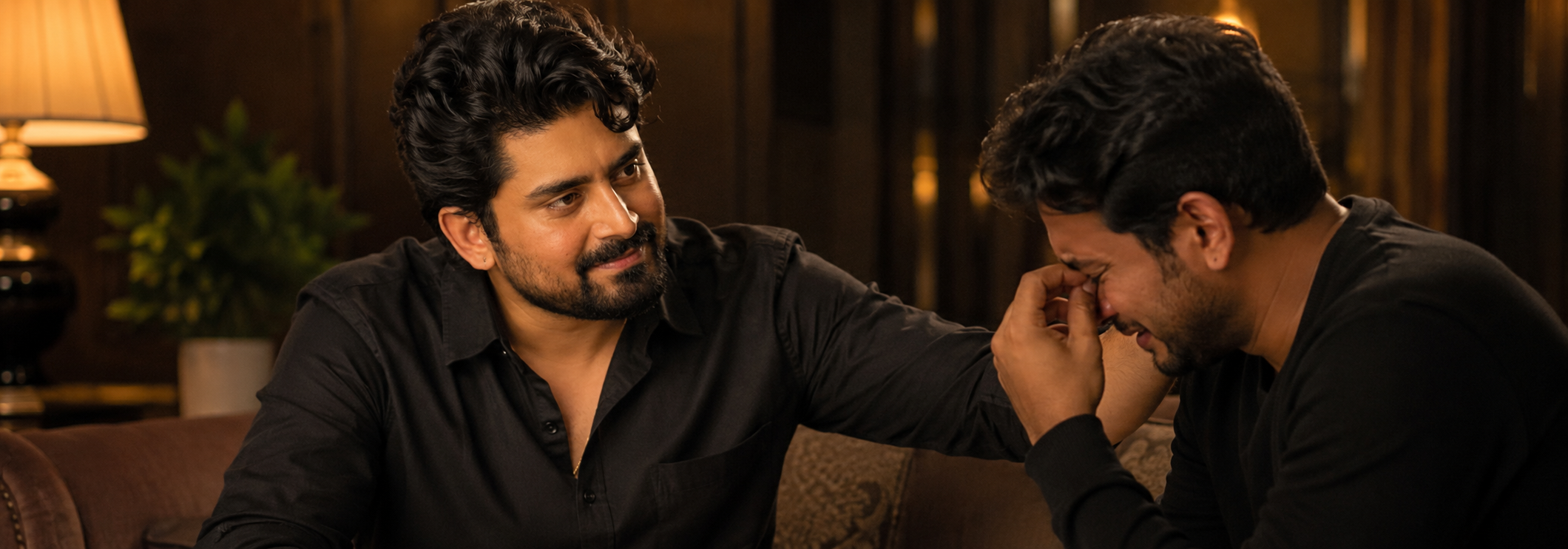
Strength is not the absence of feelings. It is knowing what to do with them.
In this post
Short on time? Remember these 3 things
- Silence is not strength. Unspoken feelings don’t disappear, they come out as anger, distance or exhaustion.
- An emotionally strong man feels fully, names clearly and acts calmly. He is not run by his emotions, and not afraid of them either.
- Use the daily Pause, Name, Choose practice. Two minutes a day builds more EQ than any lecture.
Picture a hospital corridor at 2 am. A father has just heard bad news about his own father. His wife is crying. His sister is crying. And he is standing there, jaw tight, filling forms, arranging money, calling relatives, saying “sab theek ho jaayega”. Everyone says, “Kitna strong hai.” Nobody asks him how he is. And he wouldn’t know how to answer if they did.
Most Indian men know this man. Many of us are this man. We learnt very early that our job is to handle things, not to feel things. To be the rock. To be the one who doesn’t break.
Here’s the problem. A rock doesn’t feel anything, but you do. And when a man who feels everything is trained to show nothing, the feelings don’t go away. They go underground. This post is about bringing them back up, not to make you soft, but to make you actually strong.
What we were taught about being a man
“Ladke rote nahi.” “Mard ko dard nahi hota.” “Ladkiyon ki tarah kyun ro raha hai?” “Chal, uth, kuch nahi hua.”
We heard these lines before we could even spell “emotion”. A boy falls and cries, and he is told to stop. A teenager gets his heart broken, and his friends laugh. A young man loses a job, and the family asks only one question: “Ab aage kya?” Nobody asks, “Tu theek hai?”
So boys learn a simple rule: only two emotions are allowed, anger and “I’m fine”. Sadness, fear, shame, loneliness, confusion, even tenderness, all of these get packed into one box marked “don’t open”. And we carry that box for the rest of our lives.
Myth
A strong man doesn’t show emotions.
Truth
A strong man can feel anything and still choose how he responds. That is control. Silence is just avoidance.
Why silence is not strength
Think of emotions like a pressure cooker. Feelings are the steam. Talking, naming and processing them is the whistle. When you block the whistle for years, the steam doesn’t vanish. It waits. And one day, the lid flies off over something tiny, a cold cup of chai, a child’s spilled milk, a colleague’s small comment.
That is why so many “calm” men suddenly explode. They were never calm. They were full.
The hidden cost #1: Anger becomes the only language
When sadness, fear and shame aren’t allowed, they wear anger’s clothes. You are not angry at your wife for asking about dinner. You are scared about the EMI, embarrassed about your appraisal, and tired of carrying it alone. But anger is the only door that was ever left open.
The hidden cost #2: Numbing instead of feeling
Two hours of scrolling every night. “Bas ek peg.” Working till 11 pm because home feels heavy. Binge-watching till 2 am. These are not bad habits. They are often escape routes for feelings a man doesn’t know how to face.
The hidden cost #3: Distance from the people you love
Wives often say the same thing: “He provides everything, but I don’t know what’s going on inside him.” Children grow up knowing their father’s salary but not his heart. You can live in the same house as your family and still be emotionally on a different floor.
The hidden cost #4: Loneliness among friends
Men have friends for cricket, politics, business, memes and trips. But many men can’t name one friend they could call at midnight and say, “Bhai, I’m not okay.” Our friendships are wide, but not deep. So when life gets hard, we face it alone.
The hidden cost #5: Your body keeps the score
Headaches. Tight shoulders. Acidity. Poor sleep. Feeling exhausted even after rest. Stress that is never spoken often shows up in the body instead. A lot of men discover their emotions for the first time in a doctor’s cabin.
“The strongest man in the room is not the one who feels nothing. It is the one who can feel everything and still choose his response.”
What emotional strength actually looks like
Emotional intelligence is not about crying in every meeting or sharing every feeling with everyone. It is not about becoming “soft”. It is about being the master of your inner world instead of its prisoner. Here are five signs of an emotionally strong man.
1. He can name what he feels
Not just “I’m stressed” or “I’m fine”, but “I’m disappointed”, “I feel disrespected”, “I’m anxious about money”, “I feel left out”. The more precisely you can name a feeling, the less power it has over you. You can’t handle what you can’t name.
2. He feels it without being driven by it
He can be furious and still not throw the phone. He can be hurt and still not send the message he’ll regret. Feelings are allowed in the car, but they don’t get to drive. That gap between the feeling and the action is where real strength lives.
3. He can say it calmly
“I felt bad when you said that in front of everyone.” “I’m worried about work and I haven’t been myself.” Simple sentences, said calmly, without blaming. This one skill can save a marriage, a friendship and a career.
4. He asks for help without feeling small
Asking a friend for advice, telling your partner you need support, or speaking to a counsellor is not weakness. Every top athlete has a coach. Every serious business has advisors. Getting support for your mind is just as practical.
5. He can stay steady when others are emotional
When his wife is upset, he doesn’t rush to fix it or run away from it. When his son cries, he doesn’t say “chup kar”. He can sit with someone else’s feelings without getting uncomfortable. That steadiness is what people actually mean when they call a man “strong”.

The daily practice: Pause, Name, Choose
You don’t become emotionally strong by reading about it. You build it like a muscle, with small daily reps. This is the simplest practice I teach men, and it works in the office, at home and on the road:
Pause
The moment you notice heat in your chest, a tight jaw or a racing mind, stop. Take three slow breaths. Don’t type, don’t speak, don’t decide. Just give your brain a few seconds to catch up.
Name
Ask yourself: “What am I actually feeling?” Then go one level deeper: “Am I really angry, or am I hurt? Embarrassed? Scared?” Say it silently: “I’m feeling disrespected.” Naming it calms the storm.
Choose
Now ask: “What response will I be proud of tomorrow?” Maybe it’s a calm sentence. Maybe it’s a walk. Maybe it’s “Can we talk about this in an hour?” You don’t control the feeling. You control the choice.
What emotional strength sounds like
Most men don’t lack feelings. They lack words. Here are a few real situations, and simple lines you can borrow until your own words come naturally.
With your wife, after a bad day at work
Silent version: coming home, going straight to the phone, snapping when she asks a question. Strong version: telling her what is going on, so she doesn’t take it personally.
“Today was really rough at work and I’m a bit irritated. It’s not about you. Give me twenty minutes to settle down, then I want to sit with you and tell you what happened.”
With your son, when he is crying
Silent version: “Ladke rote nahi, chup ho ja.” Strong version: teaching him that feelings are allowed and can be handled.
“It’s okay to cry, beta. I can see you’re really upset. I’m right here. When you’re ready, tell me what happened and we’ll figure it out together.”
With a close friend, when you’re not okay
Silent version: “Sab badhiya, tu bata.” Strong version: letting one trusted person in.
“Bhai, honestly, I’m not in a great space these days. Work, home, everything feels heavy. Can we meet this weekend? I just need to talk it out with someone.”
With your father, when something he said hurt
Silent version: going quiet for weeks and avoiding him at dinner. Strong version: respectful, short and honest.
“Papa, I respect you a lot, that’s why I want to tell you this. What you said in front of the family hurt me. I’m not saying it to fight. I just don’t want it to sit between us.”
With your team, when you lost your temper
Silent version: acting like nothing happened. Strong version: owning it. A leader who apologises gains more respect, not less.
“I raised my voice in yesterday’s meeting. I was under pressure, but that’s not an excuse. I’m sorry. Let’s look at the problem together today.”
“But won’t people think I’m weak?”
This is the fear that stops most men. And it’s a fair question, because some people will be surprised at first, especially people who are used to the old, silent you.
But watch what actually happens over time. Your partner trusts you more, because she finally knows what’s inside. Your team respects you more, because you are calm under pressure and honest when you mess up. Your kids come to you with problems, because you don’t shut them down. Your friends open up to you, because you went first.
Emotional honesty is not weakness. It is confidence. Only a man who is secure in himself can say, “I was wrong,” “I’m scared,” or “I need help,” without feeling smaller.
The 2-minute night check-in
Before sleeping, write three lines in your phone notes: “Today I felt ___ when ___. I handled it by ___.” No judgement, no essay. Just three honest lines. Do it for 21 nights. You will be surprised how many feelings you were carrying without even noticing.
For men ready to level up
High Value Male Bootcamp
An 8-week program for men on emotional intelligence, confidence, communication and relationships. Practical, judgement-free, and built for Indian men.
Explore the bootcampIf you are raising a son, break the chain
The silence we carry was handed to us. We get to decide whether we hand it forward. Your son is not learning masculinity from your speeches. He is learning it from watching how you handle a bad day, a loss, a fight with his mother, and a mistake at work.
Let him hear you say, “Papa is sad today.” Let him see you apologise. Hug him even when he’s “too big for hugs”. Let him cry without shame. A boy who is allowed to feel becomes a man who knows how to handle what he feels.
The bottom line
You don’t have to choose between being a strong man and a feeling man. The best men are both. They carry responsibility and they carry it honestly. They protect their families and they let their families in.
So keep the strength. Drop the silence. Pause, name, choose. Be emotionally strong, not emotionally silent.
Topics
Was this post useful?
Thank you! Share it with one person who needs to hear this today.
Written by
Jai V. Pareek
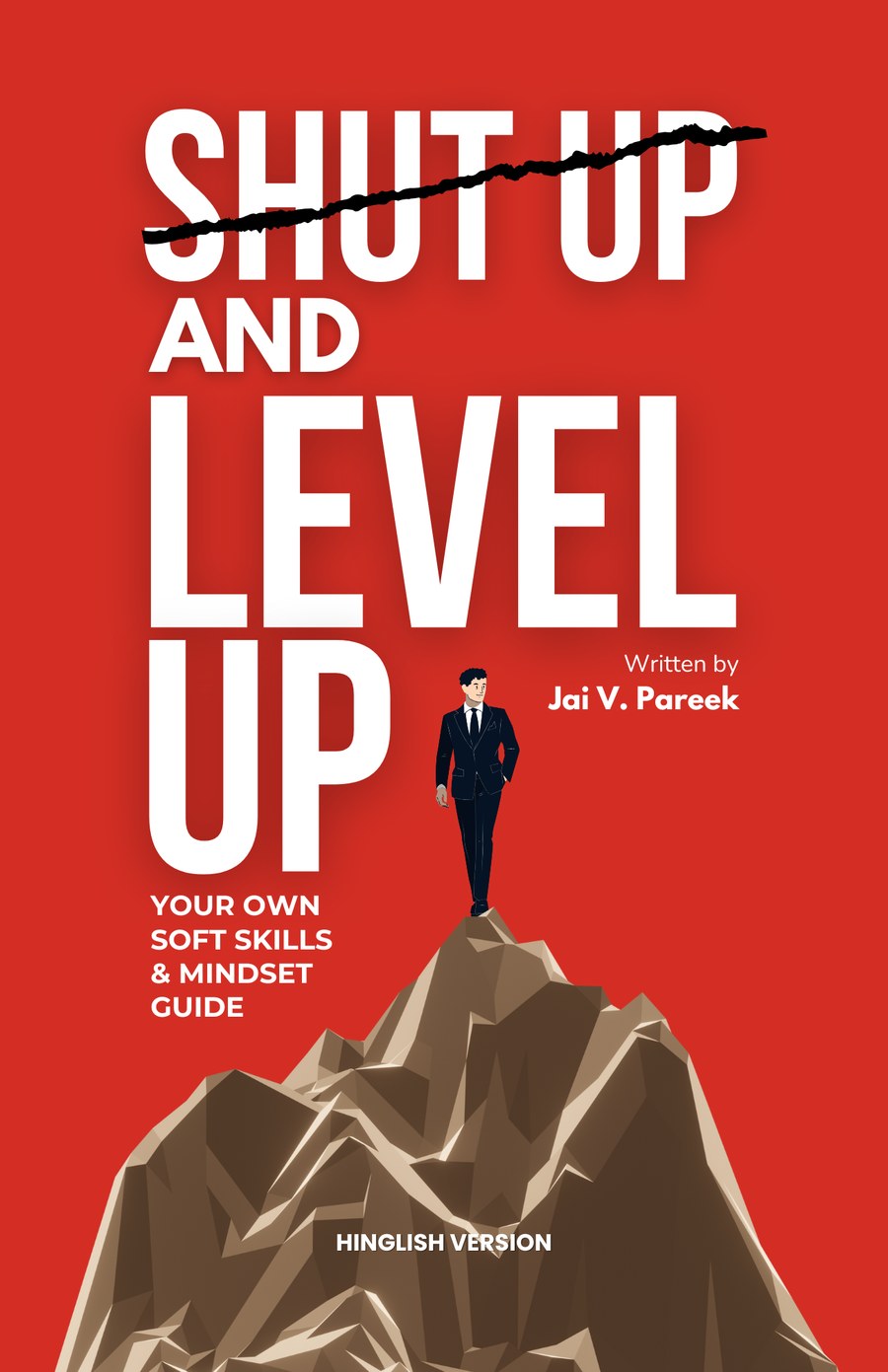
India’s Practical Transformation Coach · Author of Shut Up and Level Up
I learned most life skills the hard way, so you don’t have to. Since 2017 I have trained students, professionals and couples in soft skills and emotional intelligence, in simple language and with real-life examples.
Reading is step one
Ready to build real strength, not just a strong face?
The High Value Male Bootcamp is where men practise this, every week, with tools, tasks and a group of men on the same path. Prefer something private? Book a 1:1 call and we’ll work on what’s weighing on you, one conversation at a time.
Quick answers
Questions people ask
Isn’t showing emotions a sign of weakness in men?
No. Losing control is weakness. Hiding everything is avoidance. Being able to feel something, name it and respond calmly is the strongest thing a man can do. It takes more courage to say “I’m hurt” than to shout.
Do I have to share my feelings with everyone?
Not at all. Emotional strength is not about telling everyone everything. Start with yourself, then one or two trusted people, like your partner or a close friend. Choose who earns your openness.
I only ever feel angry. What does that mean?
Very often anger is covering something underneath: hurt, fear, embarrassment or tiredness. Next time you’re angry, pause and ask, “If this wasn’t anger, what would it be?” The answer usually tells you what really needs attention.
How can I help my husband open up?
Don’t push for big conversations. Talk side by side, on a walk, a drive or over chai. Ask simple questions and don’t react strongly to his first answer. When he does share, listen without fixing or judging. Safety builds openness.
When should a man speak to a counsellor or therapist?
If low mood, anger, anxiety or numbness lasts for weeks, affects sleep, work or relationships, or if you’re relying on alcohol or other escapes to cope, it’s time to talk to a professional. That is not weakness, it’s maintenance, like servicing a car before it breaks down.
Keep reading
You might also like

Soft skills · 9 min read
The skills school forgot to teach us
8 life skills nobody put on the syllabus, and how to learn them now.
Read the post
Indian men · 7 min read
What nobody teaches men about rejection
Rejection is information, not a verdict.
Read the post
Soft skills · 7 min read
How to say no without feeling guilty
A simple 3-line script for your boss, relatives and friends.
Read the postOne useful life skill. Every Sunday.
Short, practical, no spam. Unsubscribe anytime.
Sign-ups open soon.